Into the Shadows Chapter Guide
A careful Into the Shadows guide covering police, Blackout, escape routes, residents, the Wallace Stalk, and the unstable no-Loomis wording.
FAQ
Is there one guaranteed no-Loomis route?
Which endings are named?
Is the police car a normal exit?
What is the final chapter’s setting?
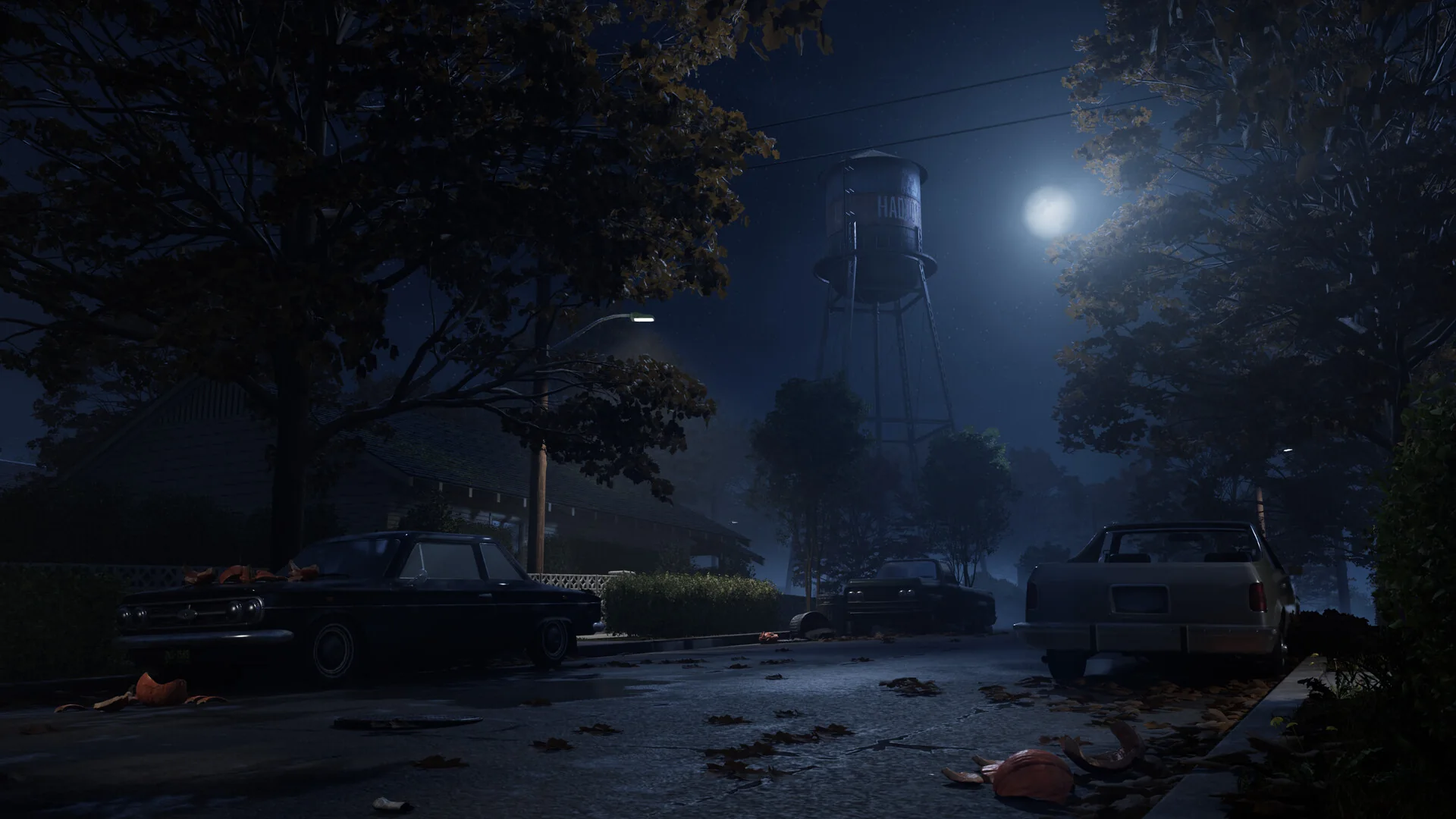
Into the Shadows is the final chapter in the sourced list. Its conditions mention two police flashlights, a pitchfork, three residents before escape, a cop in Wallace, a police car, and escaping without Loomis. Sewer, railroad, and cornfield routes are named, but the no-Loomis route is not guaranteed. This page is organized around chapter context, challenge wording, and the route a player can actually verify. It gives the source-backed answer first, then separates adjacent claims so a player can check one result without treating an unlisted detail as confirmed.
The useful boundary here is practical: watching the police response can be checked against iig, ign, gamespot, official, but no unsupported rate or timer is added.
| Checkpoint | Published fact | Source role |
|---|---|---|
| Police light condition | One challenge asks for Blackout on two cop flashlights at once. | Into Indie Games and official ability matrix |
| Escape choices | The published chapter guide names sewer, railroad, and cornfield endings. | Into Indie Games |
| Loomis wording | The escape-without-Loomis condition is described as inconsistent rather than guaranteed. | Into Indie Games |
| Police car | A challenge asks you to smash the police car until it smokes. | Into Indie Games |
Which exits are named?
If your question is about escape choices, the published answer is specific: The published chapter guide names sewer, railroad, and cornfield endings. Into Indie Games is the source role attached to that row, so this page does not replace it with a fan-made estimate.
A useful check is to note the escape choices alongside the map, chapter, role, store, or build where you saw it. Then choosing among named exits. If the prompt or result differs, preserve the observation and the date instead of silently upgrading it to a universal rule. This is a source-led answer, not a prediction. It gives you a way to choosing among named exits and tells you where the wording came from: iig, ign, gamespot, official.
How should the Blackout condition be tested?
A player can act on loomis wording without pretending the whole system is mapped. The checked wording is: The escape-without-Loomis condition is described as inconsistent rather than guaranteed. The next useful comparison is police car, which has its own evidence trail.
A useful check is to note the loomis wording alongside the map, chapter, role, store, or build where you saw it. Then testing the two-flashlight timing. If the prompt or result differs, preserve the observation and the date instead of silently upgrading it to a universal rule. Keep the question tied to the evidence. To testing the two-flashlight timing, compare the in-game result with the published record from iig, ign, gamespot, official.
Why is the no-Loomis route unstable?
Treat Police car as the page’s working checkpoint. A challenge asks you to smash the police car until it smokes. That is enough to logging whether Loomis appeared; it is not evidence for an unlisted cooldown, spawn rule, reward, or score calculation.
A useful check is to note the police car alongside the map, chapter, role, store, or build where you saw it. Then logging whether Loomis appeared. If the prompt or result differs, preserve the observation and the date instead of silently upgrading it to a universal rule. The checked sources (iig, ign, gamespot, official) support the named checkpoint; they do not turn an unlisted mechanic into a confirmed rule.
A reproducible first check looks like this:
- Open escape routes and choose the named context before starting.
- Use Police car as the named checkpoint for the run.
- Log what happened, when it happened, and how Police light condition appeared.
- Compare the result with the story hub before calling it a general rule.
What does the police-car condition mean?
The answer changes depending on what you are checking. For police light condition, the cited record says One challenge asks for Blackout on two cop flashlights at once. Keep that beside the context for escape choices before reporting a result.
A useful check is to note the police light condition alongside the map, chapter, role, store, or build where you saw it. Then checking smoke as the condition. If the prompt or result differs, preserve the observation and the date instead of silently upgrading it to a universal rule. Read this as an updateable field guide: checking smoke as the condition is actionable now, while anything outside the cited wording stays open.
Where can the escape tools be reviewed?
Start with Escape choices. The published chapter guide names sewer, railroad, and cornfield endings. The related source is Into Indie Games. That distinction matters because loomis wording is a neighboring checkpoint, not an automatic consequence of the first one.
A useful check is to note the escape choices alongside the map, chapter, role, store, or build where you saw it. Then revisiting civilian escape tools. If the prompt or result differs, preserve the observation and the date instead of silently upgrading it to a universal rule. For revisiting civilian escape tools, use the named fact as the checkpoint and the source list (iig, ign, gamespot, official) as the audit trail.
What should not be inferred from these sources?
The evidence set for this page is iig, ign, gamespot, official. It supports the rows above, but it does not publish every cooldown, spawn point, drop rate, score formula, cosmetic inventory, or farming route. Those omissions are deliberate. If a later official post or a reproducible in-game test adds one, update the row and its check date rather than backfilling the gap with a guess.
For the next step, open escape routes and the story hub. Those links carry the reader to a neighboring question instead of ending the session at a definition.
Related checks for this question
Use Loomis comeback when you need the wider campaign context, then return to escape routes for the named checkpoint. the story hub provides the second angle: it helps you separate police light condition from escape choices instead of combining them into one unsupported conclusion. The FAQ is a compact maintenance list; when a source changes, update the relevant row, wording, and last-modified date together.
Related Articles
campaign
Escape From Smith's Grove Chapter Guide
A source-led guide to Escape From Smith's Grove, including its six challenge conditions, published reward notes, and the prologue tracking warning.
campaign
Babysitters Chapter Guide
A Babysitters chapter guide for Annie, Bob, Lynda, Laurie, the Sheet, Bloodthirst 3, and the 1978 recreation condition at Doyle and Wallace.
campaign
Halloween: The Game Story Mode Walkthrough
A six-chapter, Myers-only story mode overview with chapter order, challenge links, collectible scope, route warnings, and source-backed limits on rewards.
Was this helpful?
Thanks for the feedback!