Halloween: The Game Perk System Overview
What the official perk-deck coverage establishes, how perk points and decks fit progression, and why this wiki does not invent card names or effects.
FAQ
Is there a complete perk list?
Are perks part of progression?
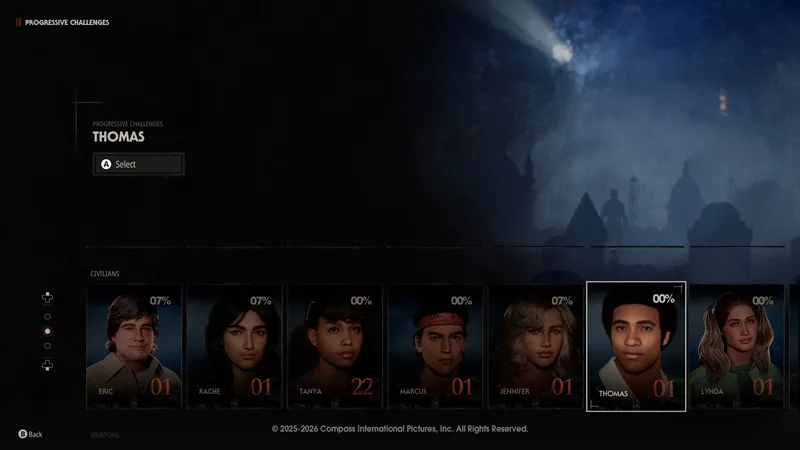
Should I invent effects from a screenshot?
What does the perk system contain?
The official Progression and Perk Deck videos establish perk points, perk cards, and decks as part of the customization loop. They do not provide a captured, complete named card catalog for this wiki. This overview explains how to read the system and where the evidence boundary sits. This page is organized around the next action, the evidence behind it, and the result that still needs testing. It gives the source-backed answer first, then separates adjacent claims so a player can check one result without treating an unlisted detail as confirmed.
This is a source-led answer, not a prediction. It gives you a way to opening the progression track and tells you where the wording came from: perkvid, progression, official.
| Checkpoint | Published fact | Source role |
|---|---|---|
| Perk cards | Official coverage names perk cards as part of customization. | official Perk Deck video |
| Decks | The progression material refers to decks rather than a single universal loadout. | official Progression and Perk Deck videos |
| Perk points | Perk points are named in the progression explanation. | official Progression video |
| Missing directory | No complete on-screen perk name list was captured for publication here. | editorial evidence check |
How do cards and decks relate?
A player can act on decks without pretending the whole system is mapped. The checked wording is: The progression material refers to decks rather than a single universal loadout. The next useful comparison is perk points, which has its own evidence trail.
A useful check is to note the decks alongside the map, chapter, role, store, or build where you saw it. Then separating a card from a deck. If the prompt or result differs, preserve the observation and the date instead of silently upgrading it to a universal rule. Keep the question tied to the evidence. To separating a card from a deck, compare the in-game result with the published record from perkvid, progression, official.
Where do perk points fit?
Treat Perk points as the page’s working checkpoint. Perk points are named in the progression explanation. That is enough to checking the point spend; it is not evidence for an unlisted cooldown, spawn rule, reward, or score calculation.
A useful check is to note the perk points alongside the map, chapter, role, store, or build where you saw it. Then checking the point spend. If the prompt or result differs, preserve the observation and the date instead of silently upgrading it to a universal rule. The checked sources (perkvid, progression, official) support the named checkpoint; they do not turn an unlisted mechanic into a confirmed rule.
Why are card names omitted?
The answer changes depending on what you are checking. For missing directory, the cited record says No complete on-screen perk name list was captured for publication here. Keep that beside the context for perk cards before reporting a result.
A useful check is to note the missing directory alongside the map, chapter, role, store, or build where you saw it. Then waiting for a visible card name. If the prompt or result differs, preserve the observation and the date instead of silently upgrading it to a universal rule. Read this as an updateable field guide: waiting for a visible card name is actionable now, while anything outside the cited wording stays open.
A reproducible first check looks like this:
- Open progression and customization and choose the named context before starting.
- Test Missing directory before drawing conclusions about the wider system.
- Save the result with the build and the nearby Perk cards context.
- Compare the result with the items hub before calling it a general rule.
Can a competitor list be copied?
Start with Perk cards. Official coverage names perk cards as part of customization. The related source is official Perk Deck video. That distinction matters because decks is a neighboring checkpoint, not an automatic consequence of the first one.
A useful check is to note the perk cards alongside the map, chapter, role, store, or build where you saw it. Then comparing only source-backed claims. If the prompt or result differs, preserve the observation and the date instead of silently upgrading it to a universal rule. For comparing only source-backed claims, use the named fact as the checkpoint and the source list (perkvid, progression, official) as the audit trail.
What should players record in testing?
The record separates Decks from Perk points. It says The progression material refers to decks rather than a single universal loadout. It also names perk points are named in the progression explanation. Read those as two claims with two tests, rather than as a hidden formula.
A useful check is to note the decks alongside the map, chapter, role, store, or build where you saw it. Then logging a loadout result. If the prompt or result differs, preserve the observation and the date instead of silently upgrading it to a universal rule. The useful boundary here is practical: logging a loadout result can be checked against perkvid, progression, official, but no unsupported rate or timer is added.
Where does the evidence stop?
The evidence set for this page is perkvid, progression, official. It supports the rows above, but it does not publish every cooldown, spawn point, drop rate, score formula, cosmetic inventory, or farming route. Those omissions are deliberate. If a later official post or a reproducible in-game test adds one, update the row and its check date rather than backfilling the gap with a guess.
For the next step, open progression and customization and the items hub. Those links carry the reader to a neighboring question instead of ending the session at a definition.
A practical next stop
Use the beginner guide when you need the wider guides context, then return to progression and customization for the named checkpoint. the items hub provides the second angle: it helps you separate perk cards from decks instead of combining them into one unsupported conclusion. The FAQ is a compact maintenance list; when a source changes, update the relevant row, wording, and last-modified date together.
Related videos


Related Articles
achievements
Halloween: The Game Achievements Guide
A sourced achievement hub for Halloween: The Game, with trophy conditions, story links, role context, and honest notes where platform wording or.
guides
How to Call the Police in Halloween: The Game
A practical, source-backed guide to civilian police calls, convincing calls, phone boxes, the police wagon, and Myers's Wrong Number counter-condition.
guides
Civilian Survival Guide for Halloween: The Game
A civilian-first guide to warning residents, lights, phones, hiding spots, escape tools, and the source-backed reasons to avoid unverified build advice.
Was this helpful?
Thanks for the feedback!